
5 Deep Tissue Facial Massage Techniques for Tension
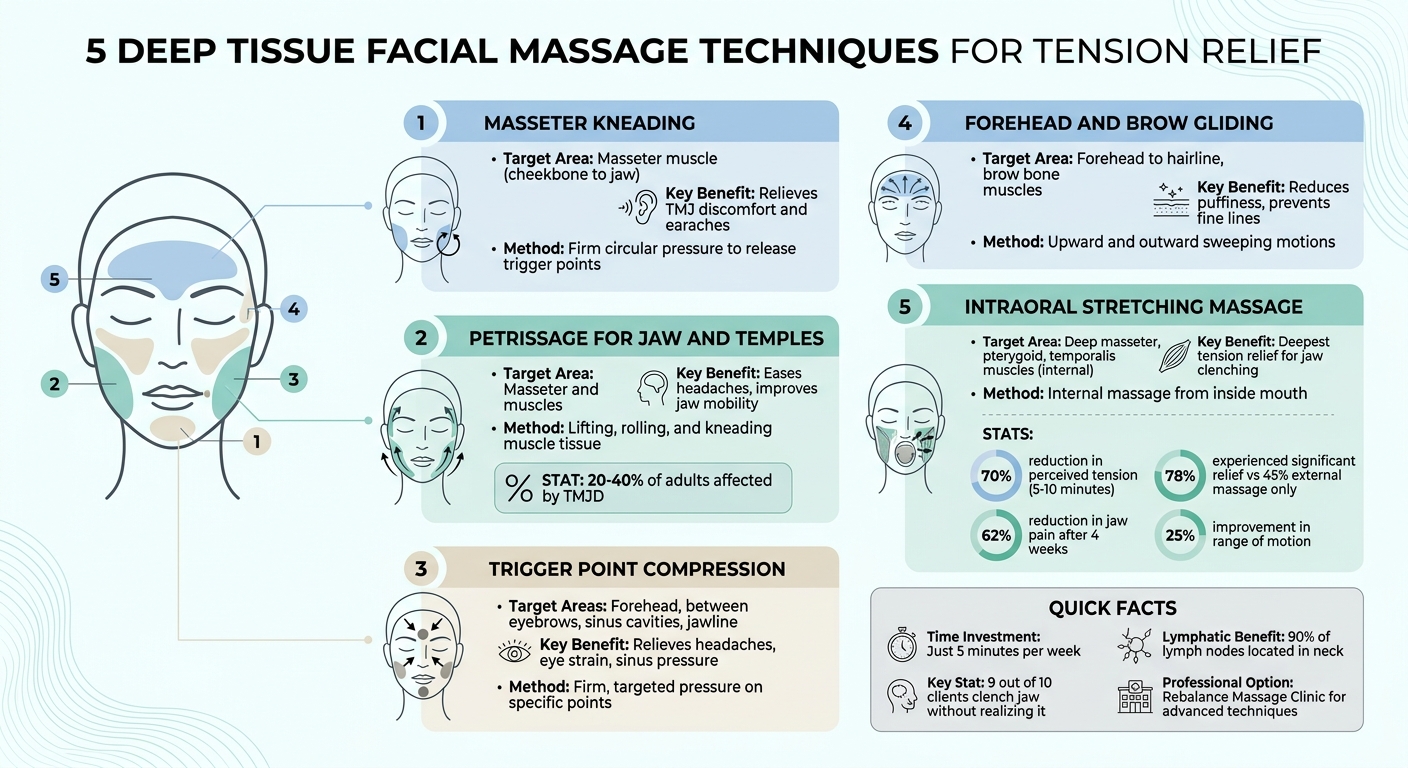
Facial tension is more common than you think. Stress, teeth grinding, and jaw clenching can overwork muscles like the masseter and temporalis, leading to discomfort, headaches, or even jaw pain. Deep tissue facial massage can help relax these muscles, improve circulation, and reduce inflammation. Here are five effective techniques to try:
Masseter Kneading: Targets the main chewing muscle to relieve tightness and improve blood flow. Great for TMJ discomfort and earaches.
Petrissage for Jaw and Temples: Lifts and kneads the masseter and temporalis muscles, easing headaches and improving jaw mobility.
Trigger Point Compression: Focuses on pressure points in the forehead, jawline, and sinuses to release muscle knots and relieve headaches or sinus pressure.
Forehead and Brow Gliding: Soothes tension in the forehead and brow muscles, reducing puffiness and helping with headaches.
Intraoral Stretching Massage: Accesses deeper jaw muscles from inside the mouth to ease clenching and improve jaw movement.
These techniques can be done at home or with a professional, promoting relaxation, better circulation, and reduced muscle tightness. Whether you're dealing with stress, TMJ issues, or sinus discomfort, these methods can deliver noticeable relief.
5 Deep Tissue Facial Massage Techniques for Tension Relief
1. Masseter Kneading
Which muscles it targets
This method focuses on the masseter muscle, the key player in chewing. It stretches from your cheekbone to your jaw and often gets ignored when facial tension builds up. Positioned behind your cheeks, about halfway between your mouth and ear, the masseter endures stress from daily habits like teeth grinding and jaw clenching. Targeting this muscle directly helps pave the way for effective tension relief.
How well it releases facial tension
Masseter kneading works by applying firm, circular pressure to release trigger points caused by overuse. These circular motions can help loosen tight muscle fibers and restore their natural state. It’s especially helpful for easing discomfort linked to TMJ issues.
"When the jaw muscles are overly tight or imbalanced, manual therapy works well to help restore normal muscle tone and balance between TMJ muscles." - Andrew Bang, DC, Chiropractor
Ease of self-application or professional use
One of the great things about masseter kneading is how simple it is to perform at home. Start by locating the masseter beneath your cheekbone, relax your jaw, and use two or three fingers to knead in firm, circular motions from the top of the muscle down to your jawline. For a deeper release, press firmly inward and upward at the notch below your cheekbone, just in front of your ear. While this can be done daily on your own, tougher cases may benefit from professional sessions with a chiropractor or massage therapist.
Relaxation and circulation benefits
In addition to easing tension, masseter kneading improves blood flow, helping to flush out waste products. This better circulation delivers fresh oxygen and nutrients to the area, promoting recovery and reducing inflammation. Regular practice can also address referred pain, such as earaches, toothaches, or even tinnitus. A 2007 study revealed that 56% of tinnitus patients with trigger points could adjust their ear ringing by applying pressure to the masseter. Up next, discover another technique to further alleviate facial tension.
2. Petrissage for Jaw and Temples
Which Muscles It Targets
Petrissage focuses on the masseter and temporalis muscles - key areas that often store tension. The temporalis muscles, located on the sides of your head just in front of your ears, work alongside the masseter to control jaw movement. Stress, teeth grinding, and poor posture can cause these muscles to tighten up. To locate the masseter, clench your jaw and feel the firm muscle under your cheekbone.
How Well It Releases Facial Tension
This technique works by lifting, rolling, and kneading the muscle tissue, reaching deeper layers to tackle stubborn tension. Unlike surface-level rubbing, petrissage targets tight muscle fibers and trigger points that can lead to headaches, earaches, and even tooth pain. A 2021 study found that manual massage techniques can significantly improve pain relief and increase mouth mobility - especially valuable for those dealing with temporomandibular joint dysfunction (TMJD), which affects 20% to 40% of adults.
Ease of Self-Application or Professional Use
You can perform petrissage at home by using two or three fingers to apply steady pressure while practicing deep, diaphragmatic breathing to enhance relaxation. Gently grasp the masseter, pull it slightly away from the face, and move it side-to-side to release tension. While self-massage is a convenient way to manage daily stress, a session with a professional massage therapist can provide a deeper and more restorative experience. This technique not only relaxes tight muscles but also prepares your face for additional tension-relief methods.
Relaxation and Circulation Benefits
Beyond easing muscle tension, petrissage boosts circulation and supports lymphatic drainage. This process helps reduce swelling, clear up your complexion, and flush out toxins from facial tissues. Staying hydrated can amplify these benefits, keeping your muscles and joints supple while preventing stiffness. Additionally, this technique may help with related symptoms like headaches, facial discomfort, and even tinnitus, offering a well-rounded approach to facial care.
3. Trigger Point Compression
Which Muscles It Targets
Trigger point compression zeroes in on specific areas of tension to promote facial relaxation. This technique focuses on pressure points where stress tends to accumulate, including the forehead, the area between your eyebrows (commonly called the "Third Eye"), the sinus cavities beneath your cheekbones, and the jawline. These spots often feel tender when pressed, as they house muscles that tighten under stress.
How Well It Releases Facial Tension
Applying firm, targeted pressure to these points helps release muscle knots, easing headaches, eye strain, and sinus discomfort.
"Acupressure uses your fingers to gently press key points on the face to help relieve headaches, eye strain, and sinus pressure. This reduces tension, increases circulation and helps your body to relax" - Whistler Day Spa
Some tenderness during or shortly after the treatment is expected, as the increased blood flow supports detoxification. This makes it an effective method for relieving facial tension and discomfort.
Ease of Self-Application or Professional Use
One of the great things about trigger point compression is how easy it is to practice at home. You don’t need fancy tools - just your fingers and a bit of oil or moisturizer to ensure smooth movement. Start by placing your fingertips in the center of your forehead, applying firm pressure, and gliding outward toward your temples. For eye strain, use your index or middle finger to press the area between your brows. To relieve sinus congestion, press gently beside each nostril, move to the area under your cheekbones, and finish at the divot near your ears. Repeat each motion three times for best results.
For a more personalized approach, professionals like those at Rebalance Massage Clinic can tailor these techniques to suit your specific concerns.
Relaxation and Circulation Benefits
Beyond easing tension, trigger point compression boosts blood flow to the areas you target. This increased circulation delivers fresh oxygen and nutrients to your facial tissues, helping to flush out toxins and reduce puffiness. When paired with manual lymphatic drainage, this technique becomes even more effective at detoxifying your face and promoting deep relaxation.
4. Forehead and Brow Gliding
Which Muscles It Targets
Forehead and brow gliding focuses on the muscles running from the space between your eyebrows up to your hairline, as well as the muscles around the brow bone. These areas tend to carry a lot of tension, especially if you spend long hours concentrating on a screen or dealing with stress. Releasing these muscles not only reduces discomfort but also helps minimize fine lines caused by chronic tension.
How Well It Releases Facial Tension
This technique is highly effective at melting away built-up stress. The upward and outward sweeping motions target tension that often leads to headaches, sinus pressure, or a tight feeling across the forehead.
"An evening facial massage is excellent for relieving any tension you may be holding in your facial muscles, which will help prevent future fine lines and wrinkles." - Glo₂Facial
To try it, place your knuckles between your eyebrows and gently glide upward toward your hairline, then sweep outward toward your temples. Performing this at night helps release the stress of the day, while a morning session can reduce puffiness and set a peaceful tone for the day ahead.
Ease of Self-Application or Professional Use
Forehead and brow gliding is simple to do at home and requires no special tools. Start by cleansing your face and hands, then apply a moisturizer or oil to reduce friction. Use your knuckles to stroke upward and outward five times, adjusting the pressure to suit your comfort level. For best results, aim for at least two sessions per week, though daily practice can enhance benefits like firmer skin and fewer wrinkles. If you have sensitive skin or active breakouts, apply lighter pressure to avoid irritation. For a more comprehensive experience, professionals at Rebalance Massage Clinic can incorporate this method into their facial treatments.
Relaxation and Circulation Benefits
This technique improves blood circulation, delivering oxygen and nutrients to the skin for a healthy, glowing appearance. It also helps reduce headaches and promotes a sense of calm.
"A morning facial massage... will stimulate your circulation so you start your day with luminous skin." - Glo₂Facial
In addition to the physical benefits, the relaxation from this massage can help ease headaches and improve sleep quality when done before bedtime. Ready for something more intense? Up next, discover a technique designed to tackle deeper facial tension.
5. Intraoral Stretching Massage
Which Muscles It Targets
This technique focuses on muscles that are often out of reach with external massage methods. It works on the deeper fibers of the masseter, pterygoid, and temporalis muscles - key internal chewing muscles that can tighten due to jaw clenching, teeth grinding, or chronic stress. By accessing these muscles from inside the mouth, this massage helps release tension at its core, easing jaw pain and improving mouth opening.
How Well It Releases Facial Tension
Research shows this method can deliver impressive results. One study noted up to a 70% reduction in perceived tension after just 5–10 minutes of use. Another study revealed that 78% of participants experienced significant relief compared to 45% who used external massage alone. These findings highlight the effectiveness of directly targeting the muscle fibers for more lasting tension relief.
Ease of Self-Application or Professional Use
A simplified version of this massage can be done at home, provided hygiene precautions are strictly followed. To try it yourself:
Wash your hands thoroughly.
Trim your nails and wear a food-grade or nitrile glove.
Locate the masseter muscle inside your cheek by opening your mouth.
Gently press and stretch each side for 20–30 seconds.
Perform three rounds while practicing deep breathing, starting with 1–2 minutes daily to avoid discomfort.
For a more precise and safer approach, professional therapists, like those at Rebalance Massage Clinic, use sterile tools and advanced techniques to access these muscles effectively and safely.
Relaxation and Circulation Benefits
This massage doesn't just ease muscle tension - it also triggers the parasympathetic nervous system, helping to lower cortisol levels and promote deep relaxation. The stretching motion improves blood flow to the inner cheek tissues and pterygoid muscles, which can reduce inflammation and puffiness. A review of 12 studies found that intraoral massage reduced jaw pain by 62% and enhanced range of motion by 25% in patients with TMJ disorders after four weeks of treatment. Many clients describe an immediate "melted" sensation in their jaw, with benefits often lasting 24–48 hours post-session.
Professional Deep Tissue Facial Massage 💆♀️ Lifting & Skin Glow
Conclusion
Spending just 5 minutes a week on these techniques can make a noticeable difference in reducing facial tension. As Master Esthetician Christine Byer puts it, "Without releasing the jaw, the face can't release and relax". Letting go of jaw tension helps stop stress from spreading to the cheeks, forehead, and even the skull.
Beyond immediate relief, these methods offer long-term benefits for your appearance. Regular facial massage not only eases tightness but also helps combat signs of aging by reducing the jaw tension that can lead to wrinkles and sagging.
Massage also improves blood flow and lymphatic drainage, which reduces puffiness and promotes healthier, more vibrant skin. With 90% of lymph nodes located in the neck, better lymphatic flow can even make your skincare products more effective.
Releasing facial tension can also have a ripple effect on your well-being, easing anxiety, alleviating headaches, and improving sleep. This is especially important since 9 out of 10 clients clench their jaw without realizing it.
For a more personalized approach, professional sessions at Rebalance Massage Clinic provide custom facial treatments that focus on your unique tension patterns. Their skilled therapists use advanced techniques - like intraoral massage - to target deep, hard-to-reach muscles. These sessions complement your at-home care, ensuring you're addressing the right areas safely and effectively for lasting results.
FAQs
×
How hard should I press during deep tissue facial massage?
During a deep tissue facial massage, use a balance of gentle and moderate pressure. The touch should be firm enough to ease tension but gentle enough to avoid any discomfort. Steer clear of applying too much force - this technique is meant to encourage relaxation and enhance blood circulation safely.
×
How often should I do these techniques for jaw tension?
For acute jaw tension, try practicing deep tissue facial massage techniques 2–3 times a day. As your symptoms start to ease, you can cut back to 2–3 sessions per week. This routine not only helps release tension but also allows your muscles the necessary time to recover.
×
Who should avoid intraoral facial massage?
People dealing with active infections, open wounds, or severe skin conditions should steer clear of intraoral facial massage. This helps avoid potential complications or skin irritation.